
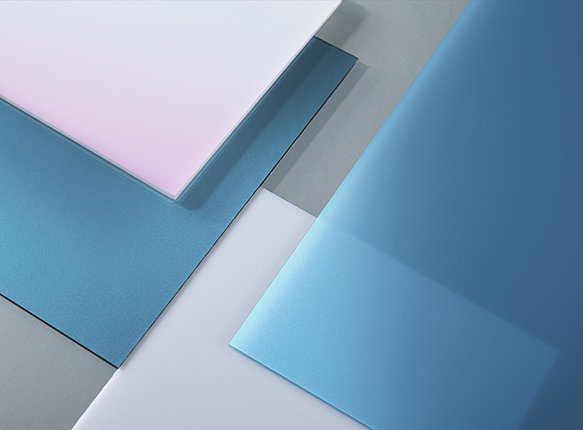
Product Overview
Acrylic Infrared Light Filter Sheet (PMMA IR Cut Filter/Acrylic Infrared Absorption Sheet/Near-IR Filter)
The Acrylic Infrared Light Filter Sheet is a functional optical panel based on spectral selective absorption principles. Manufactured from optical-grade acrylic polymerized from methyl methacrylate (MMA) monomer, this material achieves infrared band control through two technical approaches: first, dispersing organometallic complexes or cyanine dyes at molecular level within the substrate to form a bulk absorption filter structure; second, constructing multi-layer dielectric film systems on the surface through vacuum evaporation or magnetron sputtering to form an interference reflection filter structure. This material maintains high transmission in the 400-700nm visible spectrum while exhibiting strong absorption or reflection in the 700-2500nm near-infrared and mid-infrared regions, enabling precise separation of visible light from infrared radiation. It addresses the pain points of traditional glass filters—heavy weight, fragility, and high cost—providing lightweight, high-safety, easily fabricated spectral management solutions for modern optoelectronic systems.
Technical Specifications
| 参数 Parameter | 规格/数值 Specification |
|---|---|
| 基材材质 Base Material | 光学级聚甲基丙烯酸甲酯(PMMA) Optical-grade Polymethyl Methacrylate (PMMA) |
| 厚度范围 Thickness Range | 1mm – 10mm(标准:2mm, 3mm, 5mm) 1mm – 10mm (Standard: 2mm, 3mm, 5mm) |
| 标准尺寸 Standard Dimensions | 1220×2440mm, 1220×1830mm(可定制) 1220×2440mm, 1220×1830mm (Customizable) |
| 可见光透过率 Visible Light Transmission | >90%(400-700nm,未镀膜) >90% (400-700nm, uncoated) |
| 红外截止波长 IR Cut-off Wavelength | 700nm / 750nm / 800nm / 850nm / 950nm / 1100nm(可选) 700nm / 750nm / 800nm / 850nm / 950nm / 1100nm (Optional) |
| 截止深度 Blocking Depth | OD2 (99%) / OD3 (99.9%) / OD4 (99.99%) |
| 截止带宽 Blocking Bandwidth | 截止波长至2500nm Cut-off wavelength to 2500nm |
| 过渡带宽度 Transition Band Width | 30-50nm(10%T至80%T) 30-50nm (10%T to 80%T) |
| 表面反射率 Surface Reflectance | <5%(单面,未镀膜)/ <1.5%(AR镀膜后) <5% (single side, uncoated) / <1.5% (AR coated) |
| 折射率 Refractive Index | 1.49(589nm) 1.49 (at 589nm) |
| 阿贝数 Abbe Number | 57 |
| 雾度 Haze | <1% |
| 热变形温度 Heat Deflection Temperature | 95°C – 105°C |
| 线膨胀系数 Linear Expansion Coefficient | 7 × 10⁻⁵ /°C |
| 密度 Density | 1.19 g/cm³ |
| 表面硬度 Surface Hardness | 2H – 3H(铅笔硬度) 2H – 3H (Pencil hardness) |
Spectral Performance Details
Visible Light Band (400-700nm):
Utilizing high-purity optical-grade PMMA substrate with highly regular molecular chains, absorption losses in the visible region are minimal, with transmission reaching 92-94%. Combined with dual-side anti-reflection coating (AR Coating), surface reflection losses can be reduced from 8% to below 1%, increasing total transmission to over 96%, ensuring imaging systems receive maximum luminous flux.
Infrared Cut-off Characteristics:
- Short-wave IR (700-1100nm): Targeting the sensitive region of silicon-based image sensors, cyanine dyes or phthalocyanine compounds are used for absorption cut-off, preventing color cast and contrast degradation caused by near-infrared light
- Mid-wave IR (1.4-3μm): Targeting the thermal radiation peak region, interference film systems or metal oxide coatings provide reflective isolation, blocking thermal radiation interference with optical systems
- Long-wave IR (8-14μm): Targeting human body thermal radiation bands, special formulations can achieve >80% absorption rate, suitable for spectral purification in thermal imaging systems
Product Features
Precise Spectral Control Capability
Through molecular structure design and thin-film system optimization, cut-off wavelength precision can be controlled within ±10nm, with transition slope reaching 1%T/nm, achieving sharp transition from transmission to blocking. This steep spectral edge characteristic ensures efficient separation of visible and infrared light, avoiding image color fringing caused by the tailing effects of traditional absorption filters. For multi-spectral imaging systems, various spectral selection functions including band-pass, long-pass, and short-pass are available.
Superior Imaging Optical Quality
Substrate birefringence <5nm, significantly lower than standard acrylic sheets, ensuring transmitted wavefront distortion <λ/4 (@633nm), meeting high-precision imaging requirements. Optical uniformity better than 1%, free from visible striations, bubbles, or inclusions, avoiding ghost images and stray light in imaging systems. Surface flatness <λ/2 (@633nm), suitable for direct use in imaging optical paths without additional optical polishing.
Lightweight & Impact Safety
Density of only 1.19g/cm³, 50% that of optical glass filters; 2mm thickness sheet weighs only 2.4kg per square meter, significantly reducing overall optical system weight—particularly suitable for UAV payloads, handheld devices, and automotive systems. Impact resistance 7-18× stronger than ordinary glass, will not shatter into sharp fragments upon impact, protecting internal precision optical components and operator safety.
Thermal Management & Energy Saving
Thermal IR reflective products achieve >85% reflectance for 780-2500nm solar radiation thermal region while maintaining high visible light transmission, realizing selective light control of “light transmission without heat transmission.” When applied to building skylights or automotive sunroofs, indoor temperature can be reduced by 3-5°C, decreasing air conditioning energy consumption by 15-25%. The material’s thermal conductivity of 0.19W/(m·K), lower than glass, provides certain thermal insulation effects.
Environmental Stability & Long Service Life
Through the addition of UV stabilizers and antioxidants, spectral performance degradation is <5% after 10 years of outdoor exposure. Damp heat resistance passes 85°C/85%RH 1000-hour testing with no delamination, blistering, or spectral shift. Chemical corrosion resistance superior to glass, tolerating conventional optical cleaning agents and weak solvents, with simple maintenance.
Flexible Fabrication & Integration
Can be processed through cold fabrication (laser cutting, CNC milling) or thermoforming (hot bending), without grinding and polishing required for glass. Can be integrated with PC, PVC, ABS plastic components through solvent bonding or ultrasonic welding to construct complex optomechanical structures. Surface can be further coated with conductive films, anti-fingerprint films, and other functional layers to achieve electromagnetic shielding or easy-clean properties.
Applications
Machine Vision & Industrial Inspection
CCD/CMOS camera protective windows, automated optical inspection (AOI) systems, barcode scanners, fingerprint recognition modules, 3D scanners, industrial microscopes
Security Surveillance Systems
IR cut filters (IRC), day/night cameras, license plate recognition systems, facial recognition terminals, smart access control, night vision optical windows
Consumer Electronics
Smartphone camera modules, tablet lenses, laptop IR sensors, smartwatch heart rate monitoring windows, AR/VR optical components, game controller IR sensor windows
Automotive Electronics
Automotive cameras, driver monitoring systems (DMS), gesture recognition sensors, LiDAR windows, HUD head-up displays, smart sunroof thermal filtering
Medical Equipment
Endoscope optical systems, pulse oximeter sensor windows, skin analyzers, medical aesthetic equipment, surgical navigation devices, fluorescence microscope excitation filters
Architecture & Energy Saving
Smart dimming glass, museum UV/IR protective display cases, plant factory spectral control panels, building energy-saving skylights, greenhouse spectral management
Aerospace & Scientific Research
Satellite optical payload windows, UAV electro-optical pods, spectrometer optical components, astronomical observation filters, laser protective windows, multispectral imaging systems
Selection Guide
Select by Spectral Requirements:
- Color imaging systems (mobile phones/cameras): Select 700nm or 750nm cut-off to ensure accurate color reproduction
- B&W/NIR-enhanced surveillance: Select 850nm long-pass to improve night vision sensitivity through NIR transmission
- Thermal radiation control scenarios: Select full-band reflective type, prioritizing thermal insulation performance
Select by Thickness:
- Lightweight portable devices: 1-2mm, balancing strength and weight
- Standard industrial applications: 3-5mm, balancing optical performance and mechanical protection
- High-reliability environments: 5-10mm, enhanced impact resistance and thermal stability
Select by Surface Treatment:
- Imaging quality priority: Dual-side AR coating, transmission >96%
- Cost-sensitive applications: Single-side hardening, optimal scratch resistance cost-performance ratio
- Harsh environment use: Dual-side hardening + anti-fouling coating, easy cleaning and maintenance
Fabrication & Usage Notes
- Temperature Control: Thermoforming temperature recommended at 90°C-110°C; exceeding 120°C may cause dye thermal degradation or film cracking
- Solvent Selection: Use dedicated acrylic adhesives (such as chloroform, dichloromethane) for bonding; avoid ketone or ester-based strong solvents that may attack coating layers
- Cleaning Method: Use lens tissue or microfiber cloth with isopropyl alcohol for gentle wiping; prohibit dry wiping to avoid scratching coated surfaces
- Storage Conditions: Store in dark at 15-25°C dry environment, relative humidity <60%, avoid coexistence with volatile organic compounds to prevent surface hazing
Why Choose Our Acrylic IR Filter?
✓ Spectral customization capability—Dye synthesis laboratory and coating center capable of developing exclusive filter solutions based on client sensor spectral response curves
✓ Optical testing guarantee—Equipped with spectrophotometers and FTIR spectrometers, providing full-spectrum transmission test reports for every batch
✓ Mature coating processes—Dual platforms of magnetron sputtering and electron beam evaporation, film adhesion passing cross-cut and tape peel tests
✓ Clean production environment—Class 10,000 cleanroom production ensuring optical-grade surface quality free from particle defects
✓ Rapid prototyping service—Standard products 3-day delivery, custom spectra 7-10 days for validation samples
✓ Technical support team—Optical engineers assist in product selection, providing Zemax optical simulation and tolerance analysis
Ordering Information
Please provide the following technical parameters for precise product selection:
- Target cut-off wavelength and blocking depth requirements (e.g., 750nm cut-off, OD3)
- Minimum visible light band transmission requirement
- Incident angle range (normal incidence or wide-angle reception)
- Operating environment temperature and humidity conditions
- Whether dual-side AR coating or surface hardening is required
- Dimensional specifications and tolerance requirements
- Estimated annual volume and project timeline
Tags: Acrylic IR Filter, PMMA IR Cut Filter, Near-Infrared Filter, Optical Filter Sheet, Machine Vision Filter, IR Blocking Sheet, Spectral Filter, Camera Filter, Thermal Filter